Special Issue: Four Foundations
The Design Behind It
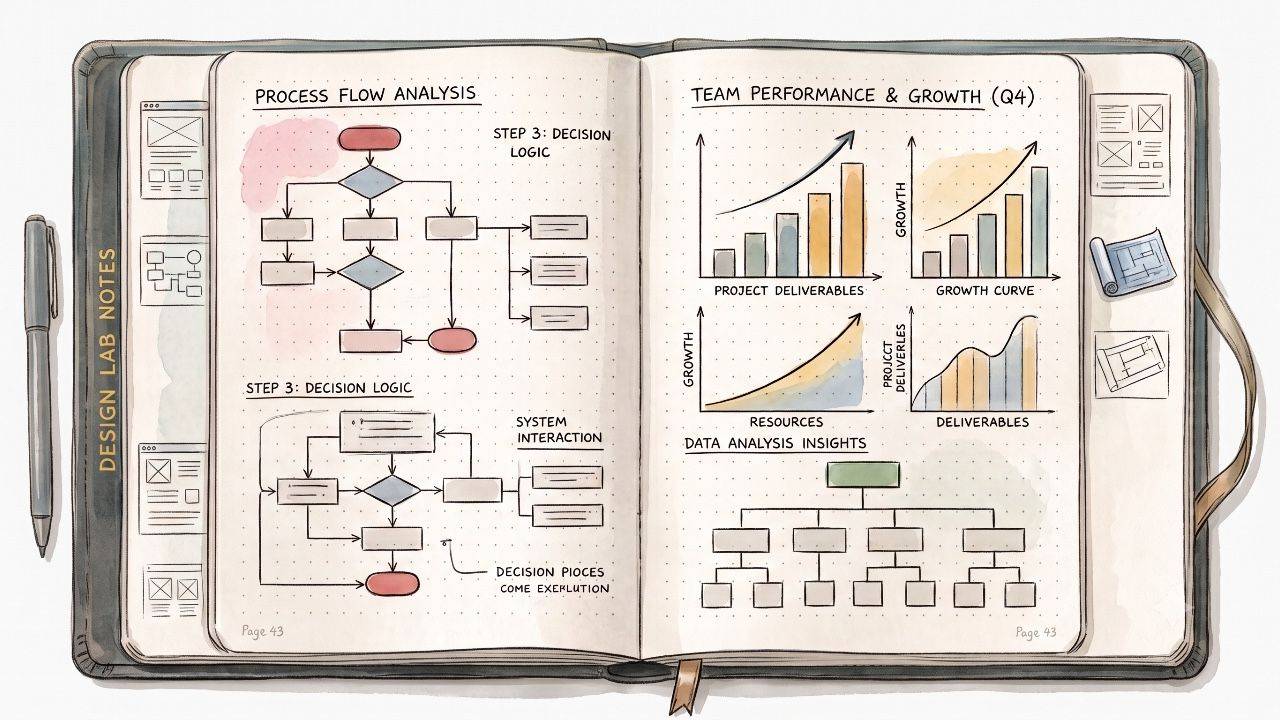
a notebook from Organization Design Studio®
A Special Edition highlighting four articles that provide the foundation on which the Organization Design Studio® rests. They run in order: why design is the lever that matters, what an organization actually is, the nine systems that make one work, and how to redesign any of them on purpose.
Here they are, short enough to read over one coffee. Each links to the full piece.
The Good, The Bad, The Uncertain
What artificial intelligence does to your organization is not written in the technology. It is written in the design.
The organizations we created, along with modern management methods, have produced knowledge, wealth, and health beyond anything humans had experienced before. They also produced side effects. Our methods have worked like powerful medicines: they treated the diseases of poverty, hunger, and early death, and they came with consequences we are only now diagnosing.
Meanwhile, no technology in history has spread as fast as AI, and so far, the results are mixed. Where it has failed to improve performance, the trouble has usually been the organization around the model, not the model itself.
When framed as trade-offs: growth or climate, technology or people, efficiency or resilience, shareholders or society, the challenges look impossible. The design task is to imagine methods that dissolve the dilemma and create value for more than one stakeholder at a time.
Good news: what humans designed, humans can redesign. Consciously or not, we designed our way into every one of these problems.
Design is the way out.
Organization Design
Organizations are complex socio-technical systems built to accomplish a purpose. They are also imagined realities that exist first in the minds of the people involved.
That imagined reality becomes an objective one through four links: systems, messages, interpretation, and behavior.
Chasing predictable results, designers have often built systems that are slow, cumbersome, and rigid, and thus predictably poor. It has happened so often that many people can no longer picture a system being useful in a fast, uncertain environment. Fortunately, systems can be designed to fit almost any kind of work, including work that demands flexibility, creativity, and speed.
But a good system is not enough. Systems reach people through messages, formal and informal; the policy, the meeting, the email, and what everyone can plainly see their colleagues doing. Too often, those messages contradict one another, and each person is left to decide privately which one to believe.
Between the imagined reality and the objective one stands a human being who interprets the messages and decides what to do and say. The behavior you see across your organization is the answer they arrived at.
Organization Systems
In August 1950, W. Edwards Deming stood in front of Japan's senior business leaders and drew production as a system.
Many have tried to map the organization the same way since, including Porter's value chain, Kaplan and Norton's strategy map, and the excellence frameworks behind Baldrige, EFQM, the Tata Business Excellence Model, and the African Excellence Forum.
Sort the activities and decisions, and you get nine connected dimensions. Three create value: customers and markets, operations and work systems, suppliers and partners. Three enable it: workforce, organizational culture, and performance intelligence and knowledge. Three guide it: strategy, governance and responsibility, and leadership.
Well-designed approaches in each of the nine are systematic, aligned, integrated, and continuously evolving. But a solid method for each piece on its own is only the beginning. The real power sits in the alignment and integration between them, which makes designing organizational systems inherently cross-functional, collaborative work.
Getting out of endless reacting from chasing symptoms, fighting the same fires, and into finding and fixing root causes takes an understanding of system dynamics and leverage points.
Fighting fires is a skill. Preventing them is a design.
Design Framework and Methodology
The Latin studium means to study. The Italian studio means a place to study or work.
Leaders today face challenges that require them to design or redesign how the organization works. Best practices borrowed from other companies, consultants, and business books can help, but they rarely reach the performance that a custom design can. What is missing is a flexible framework, a methodology, and somewhere to reimagine the organization.
Organization Design Studio® is that somewhere: a virtual space for analyzing organizations and learning through hands-on design practice. A place to work on the organization rather than in it.
Twelve labs guide the inquiry. Eight assemble the inputs: design brief, stakeholder requirements, nature of the activities, theories and research, inspiring examples, unique context, system integration, and design principles. Four turn those inputs into a working system: diagnose, design, develop, and deploy.
You learn by doing. You build design skills by building a system that your own organization actually needs.
If you are copying, you are doing it wrong.
That is the foundation. Starting next month, we will build on it with one article, one AI practice, and one study every month.
_____
Enjoy the journey,
John