Organization Design
When many people hear the words “design” and “designer,” they often think of fashion, interior design, or the design of everyday items such as glasses, saltshakers, and so forth. However, humans design everything not created by nature (consciously or unconsciously). Thus, we can purposefully design or redesign human-created organizations to produce even greater value for multiple stakeholders. Unlike buildings or objects, organizations are concepts and sometimes difficult to make fully explicit.
Organizational designs consist of artifacts that convey information about the context, culture, and systems. Artifacts take many forms, from diagrams and system descriptions to visual data displays and organizational symbols. To understand organizational design, we focus on tangible artifacts (Figure 1). In this case, the artifacts include tangible objects and communication media from four cornerstones (stakeholders, strategy, systems, and scorecard), the culture (rituals, heroes, and symbols), and the organization’s context, including the physical and external operating environments. These artifacts, including the less tangible words and deeds of leaders, are what organization members see and hear, think and feel, and ultimately say and do (behavior).
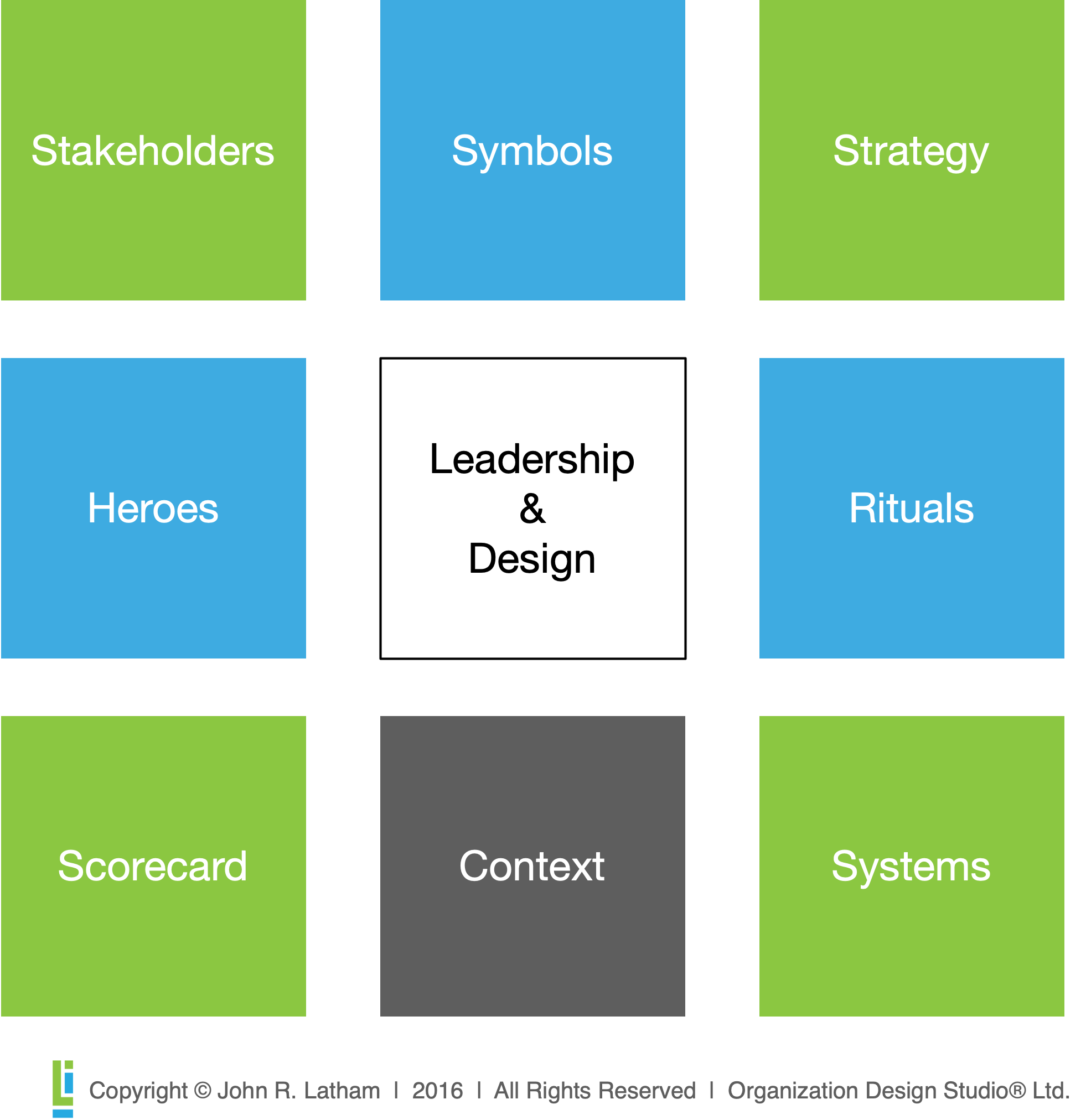
Figure 1 Organization Design Components
Cornerstones
The four cornerstones of organization design are stakeholders, strategy, systems, and scorecards. While the four components are interrelated, a logical sequence helps you think about how they align. Stakeholder needs and desires inform the development of strategies for both products and the organization’s design. Strategies produce external products and services and organizational system changes to create and deliver those products and services effectively. Finally, a comprehensive scorecard measures how well the systems and products are working, how the strategy is progressing, and the value created for the multiple stakeholders. All four cornerstones are manifested in artifacts, including documents, speeches, etc.
The first cornerstone is stakeholders, or the WHO of organization design and the basis for organizational alignment. This cornerstone has three critical elements.
First, understand the stakeholders, what they need and want.
Second, empathize with them; thoughtfully consider what it is like to be them.
Third, develop win-win relationships.
The stakeholders’ needs inform the strategy. The second cornerstone is the strategy (goals, objectives, and priorities), or the WHAT. Effective strategies for sustainable excellence address all the stakeholders. This doesn’t mean that you necessarily need individual goals for each stakeholder group. Some goals cut across multiple stakeholders.
The third cornerstone consists of the systems and processes, or HOW the strategy is executed.
Finally, the fourth cornerstone is a comprehensive scorecard, or HOW WELL you are doing. “Comprehensive” means the scorecard measures the system performance, strategy progress, and stakeholder value and satisfaction.
These four cornerstones provide a solid foundation for the journey to sustainable excellence. However, this foundation is only as strong as the alignment and linkages between the cornerstones. The cornerstones need to be consistent and congruent. Focusing on stakeholder needs and relationships helps provide a common alignment point for strategy, execution, learning, and innovation. A systems perspective combined with design thinking also provides the basis for organizational designs that create value for multiple stakeholders. These four cornerstones are inert without people to bring them to life.
Culture
The four cornerstones are held together by a culture of excellence and innovation. The culture brings these four critical components to life and provides the energy to move the organization forward. To achieve and sustain excellence, key cultural elements must align with stakeholders, strategy, systems, and the scorecard, including values, rituals, heroes, and symbols. When I ask successful leaders of organizational transformation what they would do differently next time, the most common response is that they would have aligned the organization sooner because that was where the real power was. The challenge we face with culture is that an organization's values aren't directly visible. Our values can’t be observed directly. We infer values through their manifestations, behaviors, decisions, priorities, etc. We infer values from how people act (practices) and from the organization's visible and audible rituals, heroes, and symbols.
As Mom used to say, “Choose your friends wisely.” The corollary for organizations might be, “Choose your heroes wisely.” Your heroes’ behavior (what they say and do) is a powerful message. Heroes are the individuals the organization holds up as the epitome of success. These are the people they tell stories about. They are legends.
The second tangible element of culture is the symbols. Our organization’s symbols tell us what matters and what we value (e.g., reserved parking spots).
Also, organizations have various rituals, from executive retreats to Friday afternoon beer busts. Rituals are designed to create thoughts and feelings in the participants’ minds that influence the desired behavior.
The task is to select heroes and design symbols and rituals that send messages that are aligned with our desired organization and values. Some have tried to separate culture from the other components of organizational design, such as strategy. However, all the parts work together as an integrated whole, and the design and results are context-dependent.
Context
Context is a crucial consideration when designing any aspect of the organization. For example, the most appropriate strategy development and deployment system might differ greatly for a Fortune 100 company with operations in 40 countries versus a mom-and-pop coffee shop with two locations in one city. Context includes essential information such as facilities, technology, the type of work (e.g., nuclear power vs. education), the workforce, and the organization's purpose and mission. The cornerstone and culture components need to align with and fit the unique characteristics of your organization. These all have to make sense together with the type of work you do, your facilities, the geography, etc.
Alignment
The bad news is that many organizations are a hodgepodge of ill-fitting pieces, making it difficult to create value for stakeholders. The good news is that humans designed organizations and can therefore redesign them. While low-performing organizations are chaotic, complex, and confusing, high-performing organizations are aligned and congruent. Four key elements must align and integrate for any major change effort to succeed: stakeholder needs, strategy (goals and objectives), action plans and resources, and performance measures (scorecard). In fact, aligning the cornerstones with the organizational culture may be the most important facilitator of the organization's [re]design and transformation. Alignment and integration determine how consistently the four cornerstones work together with the culture in the same direction. For our purposes, organization design is a stakeholder-centered approach to aligning and integrating the systems, strategy, and scorecard with the organization’s culture and unique context.
Why Organization Design?
So why do we focus on organizational design? An old saying is, “You can’t get flowers to grow by pulling on them.” The components of organizational design are what people see and hear. What they see and hear influences what they think and how they feel. What they think and feel influences what they say and do, or their behavior. Their behavior influences organizational performance (Figure 2).
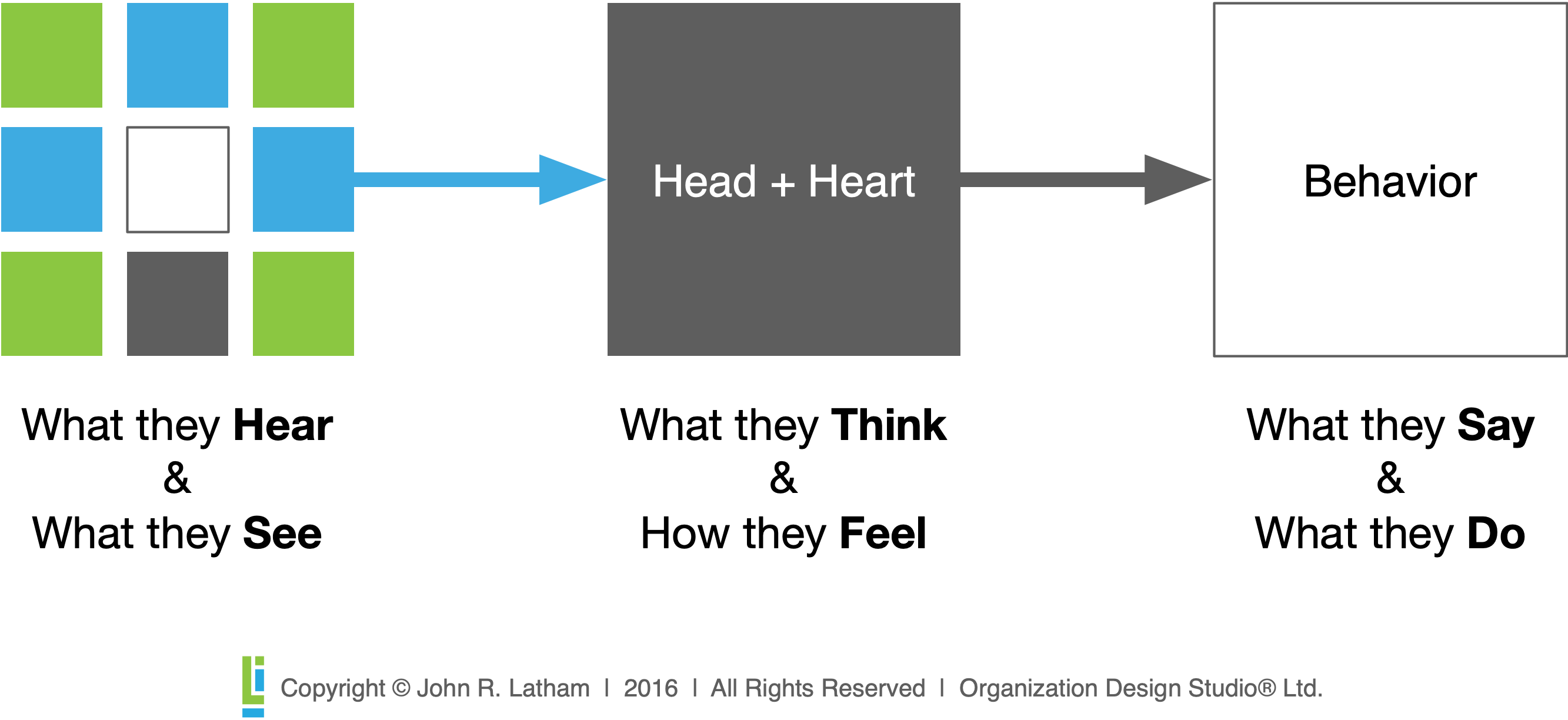
Figure 2 Why Organization Design
We focus on organization design because it influences the behavior of those who work in and with the organization. Stakeholders experience the organization’s many processes, practices, interactions, and artifacts. As they interact with the organization, stakeholders hear and see many manifestations of its design. William McDonough proposes that “Design is the first signal of human intention.” But whose intent?
The Design Behind It
Every Result Has One
A Notebook from Organization Design Studio® - Free monthly newsletter on designing organizations that perform: practices you can use, AI methods that hold up, and evidence weighed for design.
One more step: After you subscribe, check your inbox for an email asking you to Confirm Your Email. Don’t see it? Please check your spam or junk folder.
We hate SPAM. We will never sell your information for any reason.
